A Wpc Panel Board may look convincing under showroom lights, yet daily exposure tells a different story. In 2026, compare more than color and price. Check the board’s composition, thickness, surface finish, edge quality, and installation requirements. For a bathroom, ask how the product performs around moisture and ventilation. For a sunlit wall, ask about color stability and heat exposure. A sample is useful, but it cannot answer every question.
Dr. Amar K. Mohanty is a biocomposites researcher whose work is relevant to wood-based composite materials. No verified quotation from him was provided for this introduction, so I will not invent one. The guide instead uses this clearly editorial rule: “Choose for the conditions the board must face, not just the finish you like.” That distinction matters. Request product specifications, care guidance, and warranty terms, then compare them against the intended room and installation. Also consider whether the supplier explains limitations clearly. Some product claims sound reassuring but remain hard to assess without test details. That deserves a second look. This outline will help readers weigh practical performance, appearance, maintenance, and value before choosing a Wpc Panel Board.
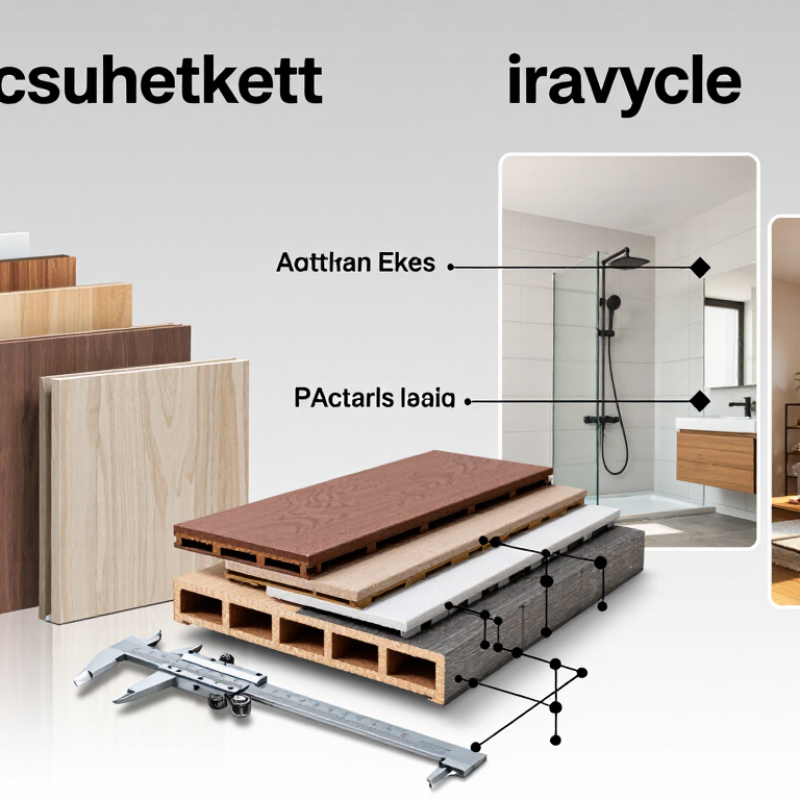
A good WPC panel choice starts with its panel type and core formulation, not just its surface color. Solid panels can feel more substantial underfoot, while hollow profiles are lighter and need careful support at edges and fixings. Common resin systems include polyethylene (PE), polypropylene (PP), and polyvinyl chloride (PVC). Each affects stiffness, moisture response, processing, and the panel’s intended use.
Wood fiber is not a minor ingredient. Technical literature, including Clemons’s review in Forest Products Journal (2002), describes wide variation in wood-plastic composite formulations. A typical specification may contain about 30–70% wood fiber by weight, with the balance largely polymer and additives. More fiber can change stiffness and surface texture, but it may also increase sensitivity to moisture if the panel is poorly compounded or sealed. The percentage alone cannot predict service life. A product sheet should state the measurement basis, resin type, density, and relevant test results.
Tips: Check a freshly cut edge, if available. Look for consistent fiber distribution, clean bonding, and no crumbly zones. Ask whether the stated fiber percentage is by weight or volume. Small detail, big difference. A tidy finish can still conceal uneven material inside.
| Panel Type | Common Resin System | Typical Wood-Fiber Content | Key Characteristics | Common Applications | What to Check Before Choosing |
|---|---|---|---|---|---|
| Solid WPC panel | Usually polyethylene (PE) or polypropylene (PP); PVC formulations are also available. | Often about 40–70% by weight, depending on the formulation. | Dense construction; generally heavier and more material-intensive than a hollow panel. Performance depends on resin, fiber, additives, and manufacturing quality. | Fencing, exterior cladding, screens, partitions, and other applications that benefit from a solid profile. | Confirm panel dimensions, density, fastening method, intended exposure, and whether the product is rated for the application. |
| Hollow-profile WPC panel | Commonly PE or PVC; PP may also be used. | Often about 30–60% by weight; the exact range varies by product and resin system. | Internal cavities reduce material use and weight. Load capacity and resistance to local impact depend on wall thickness, rib layout, and support spacing. | Decorative fencing, privacy screens, soffits, and non-structural cladding. | Check wall thickness, internal reinforcement, fixing details, and maximum recommended support spacing. Do not assume a hollow panel is load-bearing. |
| Co-extruded or capped WPC panel | A WPC core, commonly PE-based, with a polymer-rich outer cap; cap and core formulations can differ. | Core often contains about 40–70% wood fiber by weight; the overall panel percentage may be lower because of the cap. | A continuous outer layer can improve resistance to staining, moisture uptake, and surface wear, but does not make the panel maintenance-free or waterproof at every joint. | Exterior cladding, fencing, screening, and applications where surface exposure is a concern. | Ask whether the cap covers all exposed faces, how edges are finished, and what cleaning, installation, and warranty conditions apply. |
| Foamed PVC-WPC panel | PVC resin with wood fiber and a foaming system. | Often about 30–50% by weight; product formulations vary. | Foaming creates a lighter cellular structure. Surface hardness and screw-holding performance vary with density and panel construction. | Decorative wall panels, cabinetry components, signage, and interior trim in suitable environments. | Check density, edge strength, fastener guidance, fire-performance documentation, and whether the product is intended for interior or exterior use. |
| Interior decorative WPC board | Commonly PVC-based; PE- or PP-based boards are also used for some products. | Often about 30–60% by weight, depending on the board and its intended use. | May be supplied with a printed, laminated, or textured decorative surface. Moisture resistance and surface durability are product-specific. | Wall cladding, decorative partitions, cabinetry, and interior trim. | Verify indoor-use suitability, surface-finish durability, dimensional stability, and applicable emissions or fire-safety documentation. |
| Exterior architectural WPC board | Often PE- or PVC-based, selected according to the intended exposure and product design. | Commonly about 30–70% by weight across products; this is not a universal specification. | Designed for outdoor exposure, but heat, UV radiation, water, and installation details can affect service life and appearance. | Exterior façades, outdoor screens, fencing, and architectural trim. | Request relevant weathering and UV-test information, installation instructions, expansion allowances, and evidence that the board suits the local climate. |
How to interpret the percentages: Wood-fiber content is shown as an indicative percentage by total panel weight, not as a guaranteed specification. Published ranges vary by panel type, resin system, and manufacturer. The remaining formulation may include polymer resin, coupling agents, lubricants, pigments, stabilizers, mineral fillers, and other additives. Compare technical data sheets using the same measurement basis, and verify the exact composition and performance claims for the specific product.
Check whether it is solid or hollow, then review its core formulation. Solid panels can feel more substantial underfoot; hollow profiles are lighter and need careful support at edges and fixings.
Common systems include polyethylene, polypropylene, and polyvinyl chloride. Each can affect stiffness, moisture response, processing, and intended use.
A typical specification may contain about 30–70% wood fiber by weight. Ask whether the percentage is measured by weight or volume. Small detail, big difference.
Not by itself. More fiber can affect stiffness and texture, and poor compounding or sealing may increase moisture sensitivity.
Look for the fiber measurement basis, resin type, density, and relevant test results. A neat surface may still hide uneven material inside.
Density affects board weight and may indicate how consistently a panel was formed. Compare similar dimensions and compositions; higher density alone does not prove better performance.
Check the test duration, sample size, and reported percentage. Lower absorption may matter in damp areas, but poor drainage can still trap water against a panel.
Compare results only when test methods, span, thickness, and conditioning are comparable. Ask for reports referencing EN 15534-1, and confirm they match the panel being offered. I would pause over a table with no test conditions.
Choosing the best Wpc Panel Board in 2026 starts with understanding the panel type, resin system, and wood-fiber content, which commonly ranges from 30% to 70%. Select thickness according to the installation span and expected load rather than relying on appearance alone. Compare density, water absorption, and flexural strength using EN 15534-1 data to assess durability and suitability for the intended environment.
Fire performance, weather resistance, installation requirements, warranty coverage, and lifecycle cost should also guide your decision. For an ASTM E84 Class A rating, check that the reported flame spread index is 0–25 and the smoke-developed index is no greater than 450. Review maintenance needs and expected service life alongside the initial purchase and installation costs. Matching these factors to your project can help you choose a panel that balances performance, durability, and long-term value.

 Xiangying