Choosing the best Wpc Board Panel requires more than comparing colors, prices, or surface patterns. A panel may look convincing under showroom lights, yet perform poorly beside a damp bathroom wall or a sunny balcony. Its moisture resistance, density, thickness, surface finish, and fastening method deserve careful attention. These details affect stability, maintenance, safety, and service life.
In practical renovation work, installers often examine the panel edge before approving a product. A clean, dense edge usually suggests better manufacturing control. They also check whether the manufacturer provides test results, installation instructions, warranty terms, and clear material specifications. Look for evidence about water absorption, bending strength, fire performance, and resistance to insects or fading. Requirements may differ between interior walls, ceilings, partitions, and outdoor areas.
The best choice depends on the application.
A reliable supplier should explain limitations honestly, not promise unlimited performance. Ask how the Wpc Board Panel reacts to heat, heavy fixtures, repeated cleaning, and seasonal movement. Poor ventilation can create problems, even with a quality panel. That point is easy to miss.
No checklist is perfect. I would still request a sample and test it in the intended environment before placing a large order. Compare the sample under natural light, inspect its texture closely, and measure its actual thickness. A thoughtful decision balances technical evidence, installation experience, appearance, budget, and long-term expectations. Sometimes the cheapest panel is not the economical one. Sometimes the most expensive option adds little value. Reliable judgment comes from checking the details.
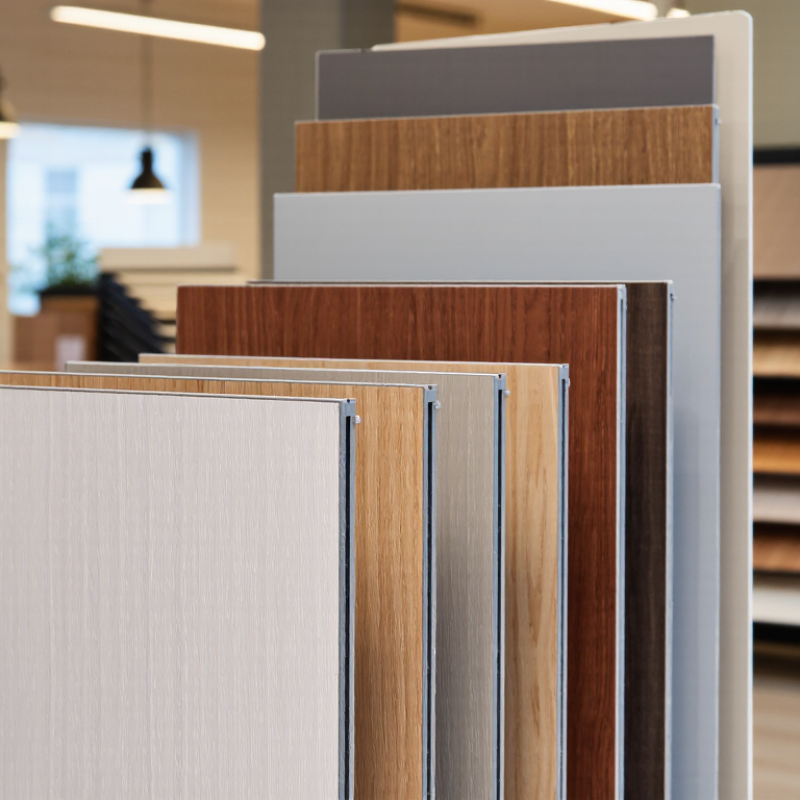
A WPC board panel is a composite material made from wood fibers and thermoplastic resin. The wood provides a natural texture and stiffness. The plastic improves moisture resistance, dimensional stability, and durability. Common wood sources include sawdust, fibers, or agricultural residues. The plastic may include polyethylene, polypropylene, or similar thermoplastics. The mix matters.
Manufacturing usually begins with drying and screening the wood material. Excess moisture can create bubbles, weak spots, or surface defects. The prepared fibers are blended with melted plastic and carefully measured additives. These additives may improve color, processing, resistance to insects, or protection from sunlight. The hot compound then passes through an extruder, where pressure forms a continuous board profile. Cooling calibrates the panel’s thickness and shape. Some panels receive embossing, sanding, coating, or a protective film.
Quality depends on more than appearance. A panel should have an even surface, consistent edges, and no visible cracks. Its density, water absorption, bending strength, and screw-holding ability also deserve attention. In practical use, a panel with too much wood may absorb more moisture. A panel with too much plastic may feel less natural and expand under heat. Manufacturing is not perfectly uniform. This is easy to overlook. Buyers should check technical data, test samples, and intended installation conditions before choosing a WPC board panel.
| Evaluation Dimension | Typical Information | Why It Matters When Choosing | Recommended Check |
|---|---|---|---|
| Definition | WPC means wood-plastic composite. A WPC board panel is a manufactured panel made by combining wood-based fiber or flour with a thermoplastic polymer and selected additives. | The material combines some wood-like appearance and workability with the moisture resistance of plastic. | Confirm the stated wood component, polymer type, and intended application. |
| Common Raw Materials | Wood flour, wood fiber, or agricultural fibers may be combined with polyethylene, polypropylene, or polyvinyl chloride. Lubricants, pigments, stabilizers, and coupling agents may also be used. | Different formulations affect stiffness, density, water resistance, surface finish, recyclability, and processing performance. | Request a material declaration and verify whether the formulation suits indoor or outdoor use. |
| Typical Wood-to-Polymer Ratio | Many WPC formulations use approximately 50% to 70% wood-based content by weight, with the balance mainly consisting of polymer and additives. Actual ratios vary by product and process. | Higher wood content can improve a natural appearance and stiffness, while higher polymer content can improve moisture resistance and processing consistency. | Compare the declared composition rather than judging quality by wood content alone. |
| Manufacturing Process | The usual sequence is material drying, size reduction, blending, compounding, profile extrusion or compression molding, cooling, cutting, and surface finishing. | Proper drying and mixing reduce voids, swelling, warping, and inconsistent mechanical performance. | Ask about process control, moisture management, dimensional inspection, and batch consistency. |
| Available Thickness | Decorative and interior panels are commonly available from about 3 mm to 20 mm, while structural or exterior products may be thicker. | Thickness influences rigidity, weight, screw-holding performance, span capability, and installation method. | Select thickness according to support spacing, load, fixing method, and local building requirements. |
| Density | Typical WPC panel density is often approximately 0.60 to 1.40 g/cm³, depending on the polymer, wood content, foaming level, and panel structure. | Density affects weight, impact resistance, screw retention, transport cost, and perceived solidity. | Compare density together with strength and void content; density alone does not determine quality. |
| Moisture Resistance | WPC generally absorbs less water than untreated wood, but it is not automatically waterproof. Cut edges, fastener holes, and poor-quality surfaces can allow moisture entry. | Moisture exposure can cause swelling, staining, dimensional movement, or degradation of the wood component. | Review water-absorption and thickness-swelling test results and protect exposed edges during installation. |
| Dimensional Stability | WPC expands and contracts with temperature and moisture changes. The movement depends on formulation, panel size, thickness, and installation conditions. | Insufficient allowance for movement may lead to buckling, joint opening, or fastener stress. | Follow the product’s expansion-gap guidance and allow panels to acclimatize when required. |
| Mechanical Performance | Important properties include flexural strength, modulus of elasticity, impact resistance, screw withdrawal resistance, and surface hardness. | The required performance differs between wall cladding, furniture components, partitions, ceilings, and load-bearing applications. | Use verified test data for the intended load instead of relying only on appearance or panel thickness. |
| Surface Options | Common finishes include smooth, embossed wood grain, brushed, matte, laminated, co-extruded, and digitally printed surfaces. | The finish affects appearance, scratch visibility, cleanability, UV exposure performance, and maintenance requirements. | Inspect a physical sample for color consistency, adhesion, texture uniformity, and edge quality. |
| UV and Weather Resistance | Outdoor WPC panels may include UV stabilizers, pigments, protective caps, or surface coatings. Indoor panels may not have equivalent weather resistance. | Sunlight, heat, rain, and freeze-thaw cycles can cause fading, surface chalking, cracking, or dimensional changes. | Request accelerated-weathering data and confirm the intended exposure category. |
| Fire Performance | WPC contains thermoplastic polymer and can burn unless specially formulated. Fire behavior varies by polymer, additives, thickness, and surface treatment. | Fire requirements are especially important for interior walls, ceilings, escape routes, and commercial buildings. | Check fire-test classification and local code compliance for the complete installed system. |
| Machining and Installation | Many WPC panels can be cut, drilled, routed, and fastened using woodworking tools, subject to manufacturer guidance. | Ease of fabrication can reduce installation time, but excessive heat or incorrect fasteners may damage the panel. | Confirm recommended blade type, pilot-hole requirements, support spacing, and fastener compatibility. |
| Indoor Air and Chemical Considerations | Emissions depend on the polymer, additives, pigments, adhesives, coatings, and manufacturing process. Not all WPC panels have the same indoor-air profile. | Low-emission materials may be required for bedrooms, offices, schools, healthcare areas, and other enclosed spaces. | Request relevant VOC or indoor-air test documentation when the project requires it. |
| Sustainability Factors | Potential benefits include the use of wood residues or recycled polymers and reduced dependence on solid timber. Recycling can be more complex when multiple materials and coatings are combined. | Environmental performance depends on recycled content, service life, transport, maintenance, and end-of-life options. | Check recycled-content evidence, environmental declarations, and available disposal or recycling routes. |
| Best-Fit Applications | Depending on its specification, WPC board can be used for decorative wall panels, ceilings, partitions, furniture components, cabinetry details, and selected exterior cladding applications. | A panel designed for decoration may not have the strength, fire rating, or weather resistance needed for structural or high-exposure use. | Match the product’s certified performance with the project environment, load, moisture level, and regulatory requirements. |
Note: The values shown are typical industry ranges or general material characteristics. Always confirm the current technical datasheet and applicable local standards for the specific WPC panel selected.
Check moisture resistance, density, dimensional stability, and working temperature range. These properties affect swelling, fastening, and long-term appearance. Request test results, not only photographs. Attractive panels can still fail.
Match the panel to its environment. Bathrooms need moisture resistance, while outdoor screens need weather and ultraviolet protection. Floors require slip resistance and wear performance. Public areas may require tested fire performance.
Wood content can improve stiffness and texture, while polymers support moisture resistance. More wood does not automatically mean better quality. Ask for composition, density, water absorption, and test methods. The ratio alone proves little.
Measure walls, corners, and service openings before ordering. Large panels reduce joints but can be difficult to carry and align. Narrow boards may suit curved layouts but need more fixing points. Waste can surprise you.
Textured finishes can hide small scratches but may collect dust. Smooth coatings usually clean faster. Matte surfaces can reduce glare near windows. Inspect weathered installations when possible, not only showroom samples.
Ensure the substrate is clean, dry, level, and strong. Check cutting behavior, edge quality, and screw-holding strength. Leave expansion gaps around joints and corners. Small gaps prevent larger cracks.
Leave ventilation behind the panels where moisture may collect. Use corrosion-resistant fasteners outside. Dark surfaces may heat quickly in direct sunlight. Shade helps, but I would still verify the temperature range.
Remove dust with a soft brush and clean marks using mild soap and water. Avoid harsh solvents, abrasive pads, and standing water. Inspect seams, fasteners, and trims every few months. Maintenance is simple, not optional.
Cut, wet, fasten, and expose the sample to sunlight. Check movement, edge quality, color change, and surface cleaning. Site results may challenge the specification. That is useful. A datasheet cannot replace observation.
Choosing the best Wpc Board Panel starts with understanding how it is made. WPC panels combine wood fibers or powder with thermoplastic materials and selected additives, creating a practical balance of strength, moisture resistance, and design flexibility. For any project, consider key properties such as density, dimensional stability, impact resistance, fire performance, water resistance, and resistance to insects or decay. These factors should match the intended use, whether for interior walls, ceilings, furniture, or semi-outdoor applications.
When comparing options, review the panel’s material composition, available thicknesses, widths, lengths, colors, textures, and surface finishes. Quality evaluation should include consistent dimensions, a smooth surface, reliable bonding, low odor, and clear safety information. Environmental impact also matters, so consider recycled content, responsible raw materials, durability, and disposal requirements. Finally, select compatible fasteners and tools, allow panels to adjust to the installation environment, follow proper spacing and support guidelines, and maintain the surface with routine cleaning and timely repairs.

 Xiangying