Global buyers are paying closer attention to material safety, installation efficiency, and long-term maintenance. Wpc Ceiling Panel products now appear in hotels, offices, retail stores, and residential renovations. Their wood-like texture can reduce the cold appearance of conventional plastic ceilings. Their lightweight structure may also simplify handling on crowded construction sites.
Grand View Research reported that the global wood plastic composites market was valued at approximately USD 7.1 billion in 2023. Its report also projects continued growth through 2030, supported by construction, automotive, and consumer applications. MarketsandMarkets identifies durability, moisture resistance, and design flexibility as important WPC market drivers. However, market reports often combine decking, automotive parts, and interior panels. That limitation matters. Ceiling-specific demand can be smaller than headline figures suggest.
Michael Carus, founder of the nova-Institute and a recognized bio-based materials specialist, has emphasized, “Bio-based does not automatically mean sustainable.” This warning applies to every Wpc Ceiling Panel purchase. Buyers should examine recycled content, resin composition, fire classification, VOC performance, and documented testing. A glossy surface alone proves very little. Supplier credibility must come from traceable certificates, factory quality controls, stable dimensions, and verified project experience.
The following list evaluates China’s leading Wpc Ceiling Panel suppliers for global buyers. It considers product consistency, customization, export capability, technical documentation, and communication quality. Some suppliers may perform strongly in one category but weakly in another. That is normal. A careful comparison remains necessary before approving samples, colors, or large-volume orders.
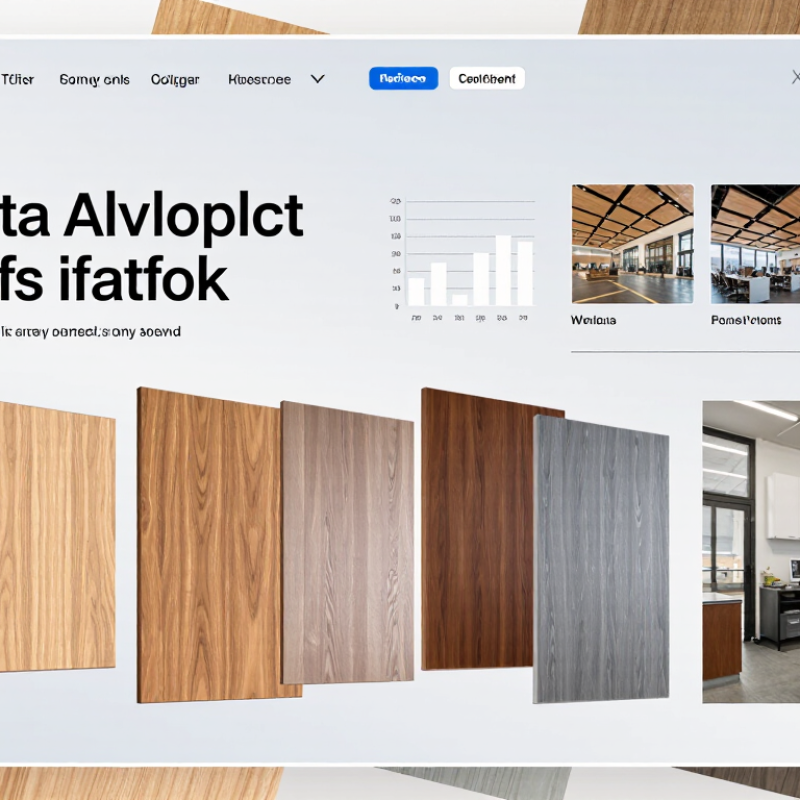
What Are WPC Ceiling Panels and Why Do Global Buyers Choose Them?
WPC ceiling panels combine wood fibers with thermoplastics, additives, and surface finishes. They create a stable alternative to untreated timber or conventional decorative boards. Buyers often choose them for moisture resistance, low maintenance, and consistent appearance. Installation is also practical because many panels are lightweight and easy to cut. Grand View Research reported that the global wood plastic composites market reached about USD 7.12 billion in 2023. The same report forecasts an 11.5% compound annual growth rate from 2024 to 2030. This growth reflects demand from construction, interiors, and outdoor applications. However, market growth does not prove every product performs equally well.
Tips: Check the core composition, fire classification, moisture test results, and installation instructions. Request technical data sheets and independent test reports. Do not judge quality from surface texture alone.
Experienced buyers should also examine thermal expansion and color stability. Dark panels may absorb more heat near skylights or glass walls. Indoor humidity can still affect poorly engineered products. I would not call every WPC panel sustainable. The European Environment Agency stresses that material durability and lifecycle impacts require careful assessment. UNEP’s 2024 buildings report also identifies the sector as responsible for around 32% of global energy use. Therefore, buyers should compare recycled content, service life, maintenance needs, and end-of-life options. A cheaper panel may become expensive after repeated replacement.
| Supplier Profile | Typical WPC Composition | Common Panel Sizes | Thickness Range | Surface Options | Core Buyer Advantages | Typical Application | Export Verification Points |
|---|---|---|---|---|---|---|---|
| Profile 01 | PVC polymer with wood flour or plant-fiber filler | 150–200 mm × 2,900–5,950 mm | 7–10 mm | Wood grain, matte, embossed, printed film | Lightweight, moisture resistant, easy to cut and install | Residential interiors and retail fit-outs | Composition declaration, dimensional tolerance, surface adhesion |
| Profile 02 | PVC-based WPC with calcium carbonate reinforcement | 200–300 mm × 2,900–6,000 mm | 8–12 mm | Flat, grooved, co-extruded, high-gloss | Stable profile, concealed fixing, low maintenance | Hotels, offices and apartment projects | Density, bending performance, thermal expansion data |
| Profile 03 | Polymer matrix blended with recycled wood fiber | 150–250 mm × 3,000–5,950 mm | 8–15 mm | Natural wood texture, brushed, painted | Wood-like appearance with improved resistance to humidity | Interior feature ceilings and wall-ceiling transitions | Recycled-content evidence, VOC testing, color consistency |
| Profile 04 | PVC and wood-fiber composite with hollow internal structure | 160–200 mm × 2,900–5,950 mm | 7–9 mm | Grooved linear, matte, decorative film | Reduced weight, faster handling, lower transport load | Large-area commercial ceiling systems | Load capacity, screw retention, profile straightness |
| Profile 05 | Solid WPC compound with higher polymer content | 150–200 mm × 2,900–6,000 mm | 9–15 mm | Deep embossing, wood veneer effect, satin finish | Robust feel, improved impact resistance, longer service potential | Hospitality, corridors and high-traffic interiors | Impact resistance, abrasion resistance, batch color control |
| Profile 06 | Low-density PVC-WPC profile with decorative coating | 180–300 mm × 2,900–5,950 mm | 6–10 mm | White, solid colors, marble effect, metallic effect | Broad design selection and economical installation | Bathrooms, kitchens and moisture-prone interiors | Water absorption, coating durability, mold-resistance claims |
| Profile 07 | Wood-fiber composite with UV-stabilized polymer additives | 150–250 mm × 3,000–6,000 mm | 8–12 mm | UV-resistant film, embossed grain, low-sheen finish | Better color-retention potential in bright interiors | Sunlit rooms and semi-enclosed areas | UV exposure test, color-change measurement, coating warranty |
| Profile 08 | Fire-retardant PVC-WPC formulation with mineral additives | 150–200 mm × 2,900–5,950 mm | 8–12 mm | Plain, linear groove, wood-grain decorative surfaces | Suitable for projects requiring documented fire performance | Public interiors and commercial developments | Fire-test standard, test specimen thickness, certificate validity |
| Profile 09 | PVC-WPC composite designed for clip or keel installation | 150–220 mm × 2,900–5,950 mm | 7–10 mm | Interlocking groove, slatted appearance, matte finish | Clean joints, concealed fasteners, efficient replacement | Modular offices and renovation projects | Accessory compatibility, joint alignment, installation tolerances |
| Profile 10 | Custom-formulated WPC compound for project specifications | Project-specific; commonly 150–300 mm × 2,900–6,000 mm | 7–15 mm | Custom color, texture, printing and coating | Design flexibility, private specifications and coordinated accessories | Residential developments and contract projects | Approved sample, production drawing, inspection plan and packing standard |
WPC panels combine wood fibers, thermoplastics, additives, and surface finishes. They resemble timber but offer more consistent dimensions. Their core composition varies by supplier.
Buyers often want moisture resistance, low maintenance, and stable appearance. Lightweight panels are easier to cut and install. They can reduce daily upkeep.
Many panels handle indoor humidity better than untreated timber. However, poorly engineered products may still swell or deform. Check moisture test results before ordering.
Request technical data sheets, batch samples, and independent test reports. Check core density, fire classification, and installation instructions. Surface texture alone proves little.
Yes, thermal expansion and color fading remain possible. Dark panels may absorb strong heat near skylights or glass walls. Allow suitable expansion gaps during installation.
Not automatically. Compare recycled content, service life, maintenance needs, and disposal options. A durable panel may create less replacement waste. The answer is not always simple.
Options include wood-grain surfaces, hollow cores, large formats, matching wall systems, and perforated acoustic panels. Custom colors and unusual dimensions may also be available. Capacity can be limited.
Review export experience, color consistency, documentation, and technical support. Ask for recent project records and installation guidance. Attractive catalog photos are not enough.
No. Market reports often combine ceilings with decking, automotive parts, and other products. Growth shows demand, not equal quality. I would verify every claim carefully.
This guide explains why Wpc Ceiling Panel systems are becoming a practical choice for international construction and interior design projects. Combining wood fibers with polymer materials, these panels can offer moisture resistance, dimensional stability, easy maintenance, and flexible decorative styles. The article also outlines how global buyers can assess Chinese suppliers by reviewing manufacturing capacity, material quality, production consistency, export experience, customization services, communication, and after-sales support.
It presents a structured comparison of ten leading supplier types without focusing on brand names, covering product designs, surface finishes, colors, sizes, packaging, pricing models, certifications, and private-label options. Before placing an order, buyers should confirm technical specifications, sample quality, minimum order quantities, lead times, payment terms, inspection procedures, shipping arrangements, and documentation required in the destination market. Careful supplier verification and clear contract terms can help reduce purchasing risks and support reliable long-term cooperation.

 Xiangying