Top 10 WPC Floor Panel Types for Global Buyers?

Time:2026-10-07 Author:Sienna
0%

Choosing the right Wpc Floor Panel is rarely as simple as comparing colors, prices, or catalogue photos. Global buyers face different climates, building standards, installation practices, and maintenance expectations. A panel that performs well in a dry warehouse may expand or deform in a humid coastal apartment.

This guide examines ten practical WPC floor panel types, including solid-core, hollow-core, co-extruded, embossed, waterproof, click-lock, commercial-grade, acoustic, recycled-content, and outdoor-rated options. Each type has a different balance of stiffness, weight, comfort, surface protection, and installation speed. Buyers should inspect more than appearance. They should review density, wear-layer thickness, dimensional stability, slip resistance, fire performance, and test documentation. Small details matter. A weak locking edge can delay an entire project.

Dr. Elena Marquez, a flooring materials consultant with experience in polymer-composite testing, notes, “The best WPC floor panel is not the thickest one; it is the one matched to the building’s real exposure and traffic.” That principle guides this comparison. Still, no ranking is perfect. Product quality varies between factories, even when specifications look similar. Samples can also hide long-term problems, such as fading, joint movement, or surface scratching. Buyers should request batch records, installation instructions, warranty limits, and independent laboratory reports. The following overview offers a clearer starting point, but final selection requires project-specific testing and honest supplier communication.
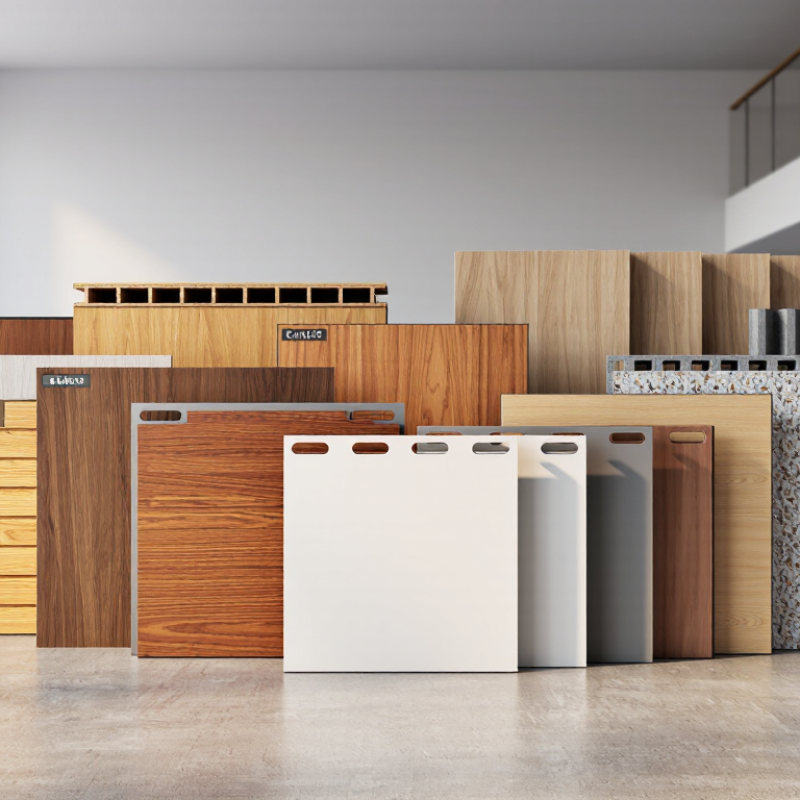
Top 10 WPC Floor Panel Types for Global Buyers?

What WPC Floor Panels Are and How Their Core Layers Work

WPC floor panels are built as a layered system, not as one solid material. WPC means wood plastic composite, combining wood-based particles with polymer binders. The core gives the panel rigidity, while the surface layers protect appearance and everyday performance. The core matters.

A typical panel includes a transparent wear layer, a printed decorative film, a WPC core, and a backing layer. The wear layer helps resist scratches, stains, and light abrasion. The decorative film creates timber, stone, or neutral visual effects. Beneath it, the WPC core balances strength, weight, and moisture resistance. Some panels use a denser core for commercial traffic. Others use a lighter, foamed core for easier handling and improved sound absorption. Details decide.

Global buyers should inspect more than thickness. Ask for water absorption data, dimensional stability results, surface-wear ratings, and installation tolerances. A panel may resist surface moisture but still suffer from poor subfloor preparation. Uneven concrete can create movement, hollow sounds, or damaged locking joints. Temperature changes also matter, especially during overseas shipping and warehouse storage. Leave suitable expansion space around walls and fixed objects.

In practical projects, thicker panels often feel more stable, but thickness alone does not guarantee quality. A soft backing can improve comfort, yet it may reduce load distribution under heavy furniture. No core is perfect. Buyers should compare laboratory reports with real installation conditions, including humidity, traffic, cleaning methods, and local building requirements. Maybe the most attractive panel is not the most reliable choice.

Top 10 WPC Floor Panel Types for Global Buyers

WPC floor panels generally combine a protective wear layer, a printed decorative film, a rigid wood-plastic composite core, and an optional balancing or acoustic backing. The core provides dimensional stability, impact resistance, and moisture tolerance, while the surface layers protect the visual design.

The chart compares representative nominal layer thicknesses commonly specified for commercial WPC flooring configurations. Values are shown in millimetres; actual construction varies by application, performance class, and manufacturer specification. The ranking is a buyer-oriented comparison, not market-share data.

How WPC Floor Panel Types Are Classified by Structure and Surface

WPC floor panels are best classified by structure and surface, not by appearance alone.

A practical top-ten framework includes four structural types: solid WPC core, foam WPC core, co-extruded WPC core, and rigid composite core. Six surface types complete the list: printed wood grain, stone pattern, embossed-in-register, brushed texture, matte finish, and high-gloss finish.

The first four affect stability, weight, and underfoot feel.

The surface six affect visual depth, cleaning, and scratch visibility.

According to Grand View Research, the global luxury vinyl flooring market reached about USD 25.6 billion in 2023. WPC panels occupy a specialized segment within this wider category.

Their appeal comes from rigid construction, water resistance, and faster installation. A solid core feels denser under heavy furniture. A foam core feels warmer and lighter. Co-extruded structures may improve edge protection, but quality varies between suppliers. Embossed-in-register surfaces look more realistic because texture follows the printed grain. Still, surface detail can collect dust. That is often overlooked.

Tips:

Ask for a cross-section sample, not only a catalog image. Check core density, locking strength, wear-layer thickness, and dimensional change after heat testing. ASTM and ISO test reports add useful evidence, but they do not replace factory inspection. The boundary between “premium” and “standard” is not always clear. Buyers should compare the same thickness, wear layer, and installation method before judging price.

The Top 10 WPC Floor Panel Types for Global Buyers

The Top 10 WPC Floor Panel Types for Global Buyers

Global buyers increasingly compare WPC panels by structure, surface, installation method, and room conditions. Fortune Business Insights valued the global WPC market at approximately USD 7.40 billion in 2023, with continued growth forecast through 2032. Construction demand remains a major driver.

Rigid-core WPC panels
Click-lock panels
Glue-down panels
Loose-lay panels
Wood-grain embossed panels
Stone-look panels
Acoustic-backed panels
Waterproof bathroom panels
Commercial-grade panels
Recycled-content panels

Rigid cores suit uneven subfloors better. Click-lock systems reduce installation time. Glue-down panels can improve stability in large spaces. Loose-lay panels help with quick replacement. Wood-grain embossing gives a warmer visual texture. Stone-look surfaces fit modern offices and kitchens.

Acoustic-backed panels can soften footsteps in apartments and hotels. Waterproof panels need carefully sealed joints, not just a waterproof label. Commercial-grade options usually require thicker wear layers and verified abrasion data. Recycled-content panels may support sustainability targets, but buyers should request percentage calculations and certification records.

Grand View Research identifies renovation, durability, and design flexibility as important forces in resilient flooring demand. Details matter. A sunny room can expose weak dimensional stability quickly. The ranking is not universal. Some panels look excellent in samples but feel too hard underfoot after installation.

Check technical sheets, moisture limits, slip resistance, VOC test results, and warranty conditions before ordering.

How to Compare WPC Flooring by Performance and Installation Needs

Top 10 WPC Floor Panel Types for Global Buyers

How to Compare WPC Flooring by Performance and Installation Needs

WPC flooring comes in many formats: standard plank, wide plank, long plank, tile-look, stone-look, concrete-look, herringbone, chevron, acoustic-backed, and waterproof rigid-core panels. Each format changes cutting time, visual scale, and waste. Grand View Research valued the global luxury vinyl flooring market at about US$25.8 billion in 2023. WPC is only one segment, but this figure shows strong demand for resilient surfaces.

Performance should match the room, not only the product label. Check wear-layer thickness, core density, dimensional stability, and slip resistance. For wet areas, inspect edge sealing and installation instructions carefully. “Waterproof” does not mean the subfloor can stay wet. Uneven concrete may telegraph through thinner panels. Experienced installers also check moisture levels before laying boards. This step is often skipped, and later movement can become expensive.

Tips: Use thicker panels for uneven subfloors, but do not treat thickness as a complete solution. Measure the room, add about 5% to 10% for cutting waste, and confirm expansion gaps. Floating systems can install faster, while glue-down systems may provide better stability in large commercial spaces. The 2024 World Floor Covering Association market outlook also highlights resilient flooring’s expanding role in renovation projects. Still, regional climate, installer skill, and subfloor quality can change the result. Lose sight of those details, and a good panel may perform poorly.

Top 10 WPC Floor Panel Types for Global Buyers? - How to Compare WPC Flooring by Performance and Installation Needs

No. WPC Floor Panel Type Typical Construction Typical Thickness Moisture Performance Wear and Scratch Resistance Installation Method Subfloor Requirement Best-Fit Applications Main Advantages Key Limitation
1 Standard Rigid-Core WPC Click Panel Wood-polymer composite core, decorative film, transparent wear layer, and optional backing 5–8 mm High resistance to surface water; joints still require correct sealing and perimeter detailing Usually suitable for residential and light commercial traffic; depends mainly on wear-layer thickness Floating installation with click-lock joints Clean, dry, firm, and level; commonly requires deviations to remain within about 3 mm over 2 m, subject to the installation manual Bedrooms, living areas, offices, retail interiors Fast installation, good dimensional stability, and broad design availability May sound hollow without acoustic backing; not automatically suitable for continuously wet areas
2 Acoustic-Backed WPC Panel Rigid WPC core combined with factory-attached IXPE, EVA, or cork acoustic backing 6–10 mm including backing High resistance to normal household moisture when joints are correctly installed Comparable to the selected standard WPC wear layer; commonly 0.3–0.5 mm in residential products Floating click installation; usually no separate underlay is needed Must be smooth and structurally sound; excessive unevenness can stress click joints Apartments, hotels, offices, and multi-level housing Reduces impact sound and installation time; improves underfoot comfort Backing can increase cost and may limit compatibility with additional underlay
3 High-Density WPC Panel Higher-density composite core with reinforced locking edges and a commercial-grade surface layer 6–10 mm Very good resistance to occasional spills and humidity; still needs protected joints and edges Often specified with 0.5–0.7 mm wear layers for heavier traffic Floating click installation; some products can be glued in demanding areas if approved Flat, dry, and stable; moisture testing is required over concrete slabs Retail stores, corridors, classrooms, healthcare support areas Better dent resistance and stronger click-joint performance than lightweight constructions Heavier to transport and may require more subfloor preparation
4 Embossed Wood-Texture WPC Panel WPC core with synchronized or registered embossing that follows the printed wood pattern 5–8 mm Determined by the core, wear layer, and locking system; normally suitable for dry interior rooms Surface texture can improve visual durability, but wear-layer specification remains the primary factor Floating click installation Level and clean surface; texture does not compensate for subfloor irregularities Homes, hospitality interiors, showrooms, and premium residential projects More realistic appearance and improved tactile feel compared with flat-printed panels Deep texture can retain dirt and may require more frequent cleaning
5 Water-Resistant Bathroom-Grade WPC Panel Low-absorption WPC core, sealed click system, protective wear layer, and moisture-resistant perimeter detailing 5–8 mm Suitable for splash-prone rooms when the product is specifically approved and joints are sealed as required Usually medium to high; select a tested wet-area surface with appropriate slip resistance Floating click installation with perimeter sealant; fixed sanitary units require careful detailing Subfloor must be dry, level, and free from movement; waterproofing below the floor may still be required Bathrooms, utility rooms, kitchens, and entrance zones More convenient than traditional wet-applied flooring and easy to clean Not equivalent to a fully tanked wet room unless the complete floor system is designed for that use
6 Fire-Performance WPC Panel WPC core and surface system formulated and tested for a specified reaction-to-fire classification 5–10 mm Generally high for indoor moisture exposure, subject to the core and joint design Varies by wear layer; fire classification does not automatically indicate superior scratch resistance Click or adhesive installation, depending on the tested assembly and local regulations The complete floor build-up may need to match the tested substrate, adhesive, and underlay Public buildings, hotels, offices, transport facilities, and regulated projects Supports project compliance where reaction-to-fire documentation is required Higher cost and fewer design options; certification must be checked for the target market
7 Glue-Down WPC Flooring Panel Flexible or semi-rigid WPC panel with a smooth backing designed for full-surface adhesive bonding 2.5–5 mm Good surface moisture resistance; adhesive and subfloor moisture control are critical Often available in medium to heavy commercial wear specifications Full-spread adhesive installation Very smooth, dry, clean, and properly primed; concrete moisture limits must be verified Large commercial spaces, retail areas, offices, and rooms requiring minimal floor height Low profile, strong surface contact, and good suitability around fixed cabinetry Slower installation, higher dependence on installer skill, and more difficult removal
8 Loose-Lay WPC Panel Dimensionally stable panel with a high-friction backing and limited or no mechanical locking 4–6 mm Good resistance to normal spills; open edges and perimeter zones must be protected Depends on the wear layer; typically offered for residential and moderate commercial use Loose-lay installation; perimeter or pressure-sensitive adhesive may be specified for larger areas Flat, smooth, dry, and free of dust; movement and unevenness can cause shifting Temporary retail fit-outs, rental housing, offices, and renovation projects Fast replacement, reduced downtime, and relatively easy access to the subfloor Less suitable for large sun-exposed rooms or areas with heavy rolling loads unless specifically approved
9 Co-Extruded Capped WPC Decking Panel Wood-polymer composite core enclosed by a dense polymer cap on the top and exposed sides 20–25 mm Very good resistance to rain and humidity when drainage and end sealing are correctly designed Better stain, fade, and moisture protection than uncapped composite decking; surface can still scratch Clip-fixed or face-fixed to a ventilated joist substructure Requires a stable, level joist system, adequate drainage, ventilation, and manufacturer-specified spacing Balconies, terraces, roof decks, pool surrounds, and outdoor walkways Strong outdoor weather resistance and lower maintenance than natural timber decking Not intended for direct installation over an indoor subfloor; heat expansion and ventilation must be managed
10 Hollow-Core WPC Decking Panel Extruded WPC profile with internal cavities, usually installed with concealed clips on joists 20–30 mm Good resistance to outdoor humidity when cavities can drain and cut ends are sealed where required Moderate to good; typically more sensitive to concentrated loads and impact than solid profiles Clip-fixed to joists with specified spans and ventilation gaps Requires accurately spaced joists, drainage, ventilation, and adequate support at board ends Residential balconies, garden decks, low-load terraces, and lightweight renovation projects Lower weight and material use; easier handling on upper-floor or retrofit projects Requires stricter span and load control; open cavities can collect debris if detailing is poor
Comparison note: Performance values are typical product ranges, not universal ratings. Global buyers should verify the technical data sheet, wear-layer thickness, dimensional stability, slip resistance, reaction-to-fire classification, acoustic results, moisture limits, expansion gaps, and installation instructions for the exact product and destination market.

What International Buyers Should Check Before Placing an Order

International buyers often compare ten WPC floor panel types. Common options include wood-look, stone-look, marble-look, herringbone, chevron, embossed, matte, acoustic, rigid-core, and foamed-core panels. Each type suits different rooms, budgets, and installation methods. A realistic sample matters more than a polished product image.

Before ordering, request the technical datasheet, installation guide, and recent quality inspection records. Check panel thickness, wear-layer depth, surface treatment, locking accuracy, and dimensional tolerance. Ask whether test results represent the current production batch. They may not.

Confirm moisture resistance with practical testing, especially for kitchens, bathrooms, and humid coastal markets. Also review slip resistance, fire performance, formaldehyde emissions, and recycling information against your destination market’s requirements.

Packaging needs equal attention. Ask for carton dimensions, pallet loading, gross weight, corner protection, and container-loading photos. A strong panel can still arrive damaged.

Order samples from several production lots and compare color, texture, and joint alignment under natural light. A mistake I have seen is approving one sample and ignoring batch variation.

Confirm the warranty conditions, replacement process, lead time, payment terms, and inspection point in writing. Request a pre-shipment inspection before the remaining balance is released. Ask whether installation requires a specific underlay or expansion gap. Small details create expensive claims.

FAQS

What is a WPC floor panel made of?

It uses wood-based particles, polymer binders, surface layers, and a backing layer. The core provides rigidity.

What layers are usually found in a WPC panel?

A typical panel has a wear layer, decorative film, WPC core, and backing layer. Each layer has a different job.

What does the wear layer protect against?

It helps resist scratches, stains, and light abrasion. It cannot prevent every type of damage.

Does a thicker panel always perform better?

No. Thickness can improve stability, but it does not guarantee quality. Core density, backing, and installation also matter.

Is WPC flooring completely unaffected by water?

No. Some panels resist surface moisture, but wet subfloors can still cause movement or damage. Water resistance needs practical testing.

How should buyers compare different WPC floor panels?

Check wear-layer depth, core density, dimensional stability, slip resistance, and installation requirements. Product labels are not enough.

What happens when the subfloor is uneven?

Panels may move, sound hollow, or damage their locking joints. A thicker panel may help, but it is not a complete fix.

How much extra material should buyers order?

Measure the room and usually add about 5% to 10% for cutting waste. Complex patterns may require more.

What should international buyers request before ordering?

Ask for technical datasheets, installation guides, recent inspection records, and batch-related test results. Records may not match current production.

Why are samples from several production lots useful?

They reveal possible differences in color, texture, and joint alignment. Compare them under natural light.

What packaging details should buyers check?

Confirm carton size, pallet loading, gross weight, corner protection, and container-loading photos. Strong panels can still arrive damaged.

What installation details deserve special attention?

Confirm the underlay, expansion gaps, moisture levels, and installation method. Floating systems may install faster, while glue-down systems can offer greater stability.

Conclusion

This guide explains what a Wpc Floor Panel is and how its layered construction supports strength, stability, moisture resistance, and everyday comfort. It introduces the main ways these panels are classified, including core composition, locking structure, surface texture, wear layer, visual finish, and installation format. Based on these features, the article presents ten practical WPC floor panel types for global buyers, covering options suited to residential rooms, commercial spaces, renovation projects, and areas with changing humidity conditions.

The guide also shows how to compare flooring performance according to traffic level, dimensional stability, underfloor compatibility, maintenance needs, installation method, and expected service environment. Before placing an international order, buyers should confirm panel size, thickness, technical specifications, packaging, sample consistency, quality inspection procedures, shipping details, and after-sales communication. These checks can help buyers select suitable flooring with clearer expectations and reduce avoidable issues during installation and long-term use.

Sienna

Sienna

Sienna is a skilled marketing professional with a deep expertise in our company’s core products and services. With a passion for innovation and detail, she plays a pivotal role in crafting insightful blog posts that not only highlight the unique features of our offerings but also provide valuable......