Top WPC Wooden Panel Manufacturers for Global Buyers?

Time:2026-10-17 Author:Charlotte
0%

Choosing among the top WPC Wooden Panel manufacturers requires more than comparing catalog prices. Global buyers need verified materials, stable production, and clear communication. A polished website proves little. Factory evidence matters more.

WPC panels combine wood fibers with thermoplastic polymers, creating surfaces for walls, ceilings, furniture, and outdoor applications. Experienced manufacturers should explain fiber content, resin type, density, moisture resistance, fire performance, and surface treatment. They should also provide recent test reports from recognized laboratories. Ask for production samples. Check the edges, color consistency, locking system, and packaging strength. Small flaws often appear there.

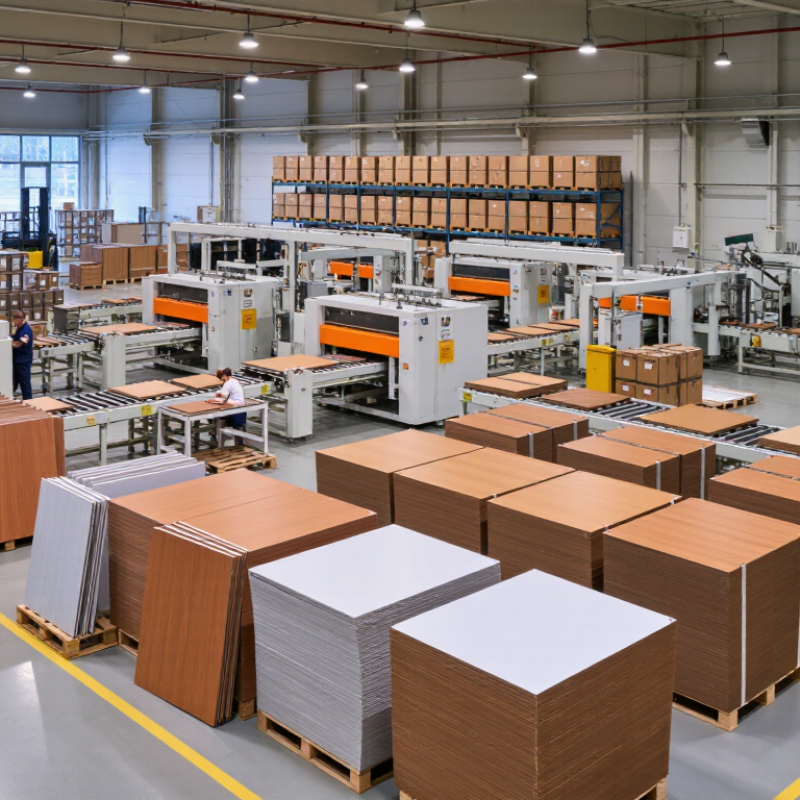
Reliable suppliers usually share factory photographs, quality procedures, export experience, and realistic lead times. They should identify which standards their products meet, rather than making vague global claims. Buyers must confirm local building requirements independently. A certificate may not cover every application or market.

Details matter.

A useful comparison should examine mold control, dimensional stability, ultraviolet resistance, and installation support. It should also review warranty terms, replacement policies, and container loading methods. A low quotation can hide thin panels, inconsistent batches, or weak cartons. On the other hand, higher pricing does not automatically indicate better quality. This is where careful evaluation becomes necessary.

Manufacturers may present impressive samples, but long-term performance remains difficult to judge before installation. Therefore, this guide focuses on evidence, not advertising. It compares production capability, technical transparency, customization options, and buyer feedback. Some information may still require direct confirmation. That limitation should be acknowledged. For global buyers, the strongest partner is not always the largest factory, but the one that answers difficult questions clearly and consistently.
Top WPC Wooden Panel Manufacturers for Global Buyers?

WPC Panels Explained: Composition, Density, and Performance Metrics

WPC panels combine wood fibers, thermoplastic resin, and performance additives. Wood content commonly ranges from 30% to 60%. The polymer may be PVC, HDPE, or polypropylene. Stabilizers, pigments, and coupling agents improve processing and durability. The exact formula matters more than the word “WPC.”

Density usually falls between 0.80 and 1.40 g/cm³. Higher density can improve stiffness and screw-holding strength. It may also increase weight and cost. Buyers should request tested flexural strength, water absorption, impact resistance, and thermal expansion data. A low water-absorption figure is useful, but edge sealing still matters. Panels near hot windows can expand noticeably. Allow movement during installation.

In factory inspections, I check cut edges, surface consistency, and internal voids. A smooth face can hide uneven filling. That is a real risk. Samples should be conditioned before testing, not tested immediately after production. Fire performance also varies with resin and additives. Ask for reports from competent, independent laboratories. Test methods must match the intended market. Some suppliers provide impressive numbers without clear test conditions. That deserves careful questioning. Moisture, sunlight, and installation quality can change field performance more than a brochure suggests.

Global WPC Market Outlook: 7–8% CAGR and Regional Demand Patterns

Global WPC demand is entering a steady expansion phase. Recent assessments from Grand View Research and Mordor Intelligence place projected growth near 7–8% CAGR through the late 2020s. Their market boundaries differ, so the figures are not perfectly comparable. Forecasts are not promises.

Asia-Pacific is expected to deliver the strongest volume growth, supported by urban construction, outdoor flooring, and façade renovation. In humid coastal cities, buyers often inspect water absorption, ultraviolet stability, and surface temperature before price. North America remains a mature market, where replacement decking and low-maintenance residential projects support recurring demand. Europe shows steadier growth, influenced by renovation programs, environmental documentation, and stricter material performance expectations.

Regional demand changes the best supplier profile. A panel manufacturer serving global buyers should provide batch testing, installation guidance, and traceable raw-material records. Technical sheets should state density, flexural strength, moisture behavior, and fire classification clearly. Small details matter, including pallet protection after a long sea journey. Some forecasts understate freight disruption and local building rules. I would therefore compare three-year demand data with current project pipelines, rather than relying on CAGR alone. Cost still matters, but inconsistent color, warped edges, or unclear warranty terms can erase the initial saving.

Ranking Manufacturers by Capacity, Certifications, and Quality-Control Data

Top WPC Wooden Panel Manufacturers for Global Buyers?

A credible ranking starts with verified production capacity, not factory photographs. Grand View Research estimated the global wood-plastic composites market at about USD 7.14 billion in 2023. Demand growth makes capacity data more important. Buyers should request annual output, extrusion-line count, utilization rates, and average lead times. A supplier reporting 20,000 tonnes annually should show equipment records and recent shipment evidence.

Certifications separate basic sellers from controlled manufacturers. ISO 9001 supports documented quality procedures, while ISO 14001 indicates structured environmental management. EN 15534 and ASTM D7031 offer useful benchmarks for composite performance.

Still, certificates alone prove little. Check certificate scope, expiry dates, testing laboratories, and whether the listed factory matches the production site. Small details matter.

Quality-control ranking should use measurable results. Compare water absorption, flexural strength, density tolerance, screw-holding performance, and color variation after weathering. Independent laboratory reports are stronger than internal claims.

Batch certificates should identify resin content, moisture level, date, and inspection method. A practical audit can include random panel sampling and a 24-hour water test. It is not perfect, but it exposes inconsistency.

Some manufacturers publish impressive numbers without showing failure rates or corrective-action records. That gap deserves attention.

Top Manufacturer Profiles: Export Reach, Production Scale, and Product Range

Top WPC Wooden Panel Manufacturers for Global Buyers?

Global buyers often compare WPC panel manufacturers by export reach, production scale, and product range. A capable manufacturer should show stable overseas shipments, clear packaging records, and responsive technical support. Ask for recent factory photos, loading records, and independent test reports. Claims alone are not enough.

Large-scale producers usually operate several extrusion lines and maintain broad panel inventories. Their ranges may include exterior wall panels, ceiling systems, decorative slats, fencing boards, and customized profiles. This scale can support regular container orders and consistent color matching. However, larger output does not always mean better service. Small buyers may receive slower replies or limited design attention.

Specialized manufacturers often focus on custom textures, low-volume trials, or project-based dimensions. Their export reach may be narrower, but communication can feel more direct. Buyers should check moisture resistance, impact performance, screw-holding strength, and surface stability under heat. Request samples from different batches. Differences sometimes appear.

Reliable production teams record resin ratios, wood fiber content, extrusion temperatures, and final inspections. They should explain these controls without hiding technical details. Visit the facility when possible, or arrange a third-party audit. No profile is perfect. A supplier may offer attractive finishes yet lack fast spare-part support. Another may export widely but need stronger quality consistency. Careful buyers compare evidence, not polished promises.

Top WPC Wooden Panel Manufacturers for Global Buyers? - Top Manufacturer Profiles: Export Reach, Production Scale, and Product Range

Anonymous regional manufacturer profiles based on commonly disclosed WPC panel specifications, international supply practices, and standard export requirements.

Manufacturer Profile Primary Manufacturing Region Typical Production Scale Export Reach Core Product Range Common Technical Specifications Customization Capability Typical Buyer Segments Key Selection Considerations
Profile A: Large Export-Oriented Factory East and Southeast Asia Large-scale, multi-line production
Continuous extrusion or high-volume compression-molding capability; usually operates dedicated quality-control and export departments.
North America Europe Middle East Southeast Asia Africa Interior wall panels Exterior cladding Fluted panels Hollow panels Solid panels Ceiling systems Typical thickness: 8–30 mm
Typical panel lengths: approximately 2.4–5.95 m
Wood-fiber or wood-flour content is commonly blended with thermoplastics and mineral additives.
Custom colors, surface embossing, gloss levels, dimensions, packaging, private-label cartons, and project-specific profiles. Building-material distributors, commercial contractors, hotel projects, residential developers, and container-load importers. Confirm production-line capacity, color consistency between batches, container loading plans, fire-test documentation, and long-term outdoor weathering data.
Profile B: Mid-Sized OEM Specialist China and other established Asian manufacturing clusters Mid-sized, flexible production
Suitable for mixed-SKU orders, smaller project batches, and OEM programs requiring frequent design changes.
Europe Australia Gulf States Latin America Decorative wall panels Wood-grain boards Acoustic-look panels Molded trims Furniture components Common widths include approximately 150–300 mm for narrow slat designs and wider formats for sheet applications; thickness depends on the profile and intended load. Strong capability for custom molds, private-label packaging, color matching, profile development, and trial production. Interior designers, furniture manufacturers, online building-material sellers, renovation companies, and regional wholesalers. Check mold ownership, minimum order quantities, sample-to-mass-production consistency, packaging protection, and spare-mold policy.
Profile C: Outdoor-Grade Composite Panel Producer Asia-Pacific and coastal manufacturing regions Medium to large-scale outdoor-product production
Typically equipped for co-extrusion, UV-resistant surface layers, or enhanced weatherability formulations.
North America Europe Australia Coastal markets Exterior wall cladding Fascia boards Soffit panels Privacy screens Decking-related profiles Weather-resistant grades commonly use UV stabilizers, pigments, protective coatings, or co-extruded caps; thermal expansion must be considered during installation. Custom surface textures, capped or uncapped options, project colors, matching trims, corner pieces, clips, and concealed-fixing accessories. Façade contractors, landscape suppliers, public-space projects, residential builders, and exterior renovation distributors. Request accelerated weathering results, water absorption data, slip or surface-performance information where relevant, and installation allowances for expansion.
Profile D: European Compliance-Focused Producer Western, Central, and Eastern Europe Small to mid-sized specialized production
Often focused on controlled product lines, regional logistics, technical documentation, and project-based supply.
European Union United Kingdom Scandinavia Neighboring markets Interior decorative panels Moisture-resistant boards Acoustic systems Architectural profiles Technical trims Product documentation commonly emphasizes dimensions, reaction-to-fire classification where tested, emissions information, installation instructions, and material traceability. Limited-to-moderate customization; usually stronger in project colors, certified assemblies, profile engineering, and local-language technical support. Architects, specification consultants, public procurement projects, commercial interiors, and local building-material distributors. Verify applicable fire, VOC, recycling, packaging, and construction-product documentation for the destination country and intended application.
Profile E: Regional Cost-Competitive Producer South Asia, the Middle East, and nearby industrial zones Small to mid-sized production
Often optimized for regional delivery, standard designs, competitive pricing, and short replenishment cycles.
South Asia Middle East East Africa Regional projects Interior wall cladding Ceiling panels Decorative slats Basic trims Retail-fit-out panels Standard decorative formats are commonly offered in wood-grain, solid-color, matte, and textured finishes; performance varies by resin system and formulation. Moderate customization for color, length, packaging, and selected profile designs; custom tooling may require a minimum order. Fit-out contractors, local distributors, retail chains, hospitality projects, and price-sensitive construction buyers. Compare resin content, surface durability, dimensional stability, moisture resistance, sample quality, and landed cost rather than unit price alone.
Profile F: Premium Design and Project Supplier Europe, North America, and advanced Asian design-manufacturing hubs Specialized, lower-volume premium production
Prioritizes design development, architectural detailing, finish quality, and project coordination over commodity volume.
North America Europe Asia-Pacific Luxury projects Premium fluted panels Decorative partitions Integrated trims Acoustic-look systems Bespoke architectural panels Emphasis is generally placed on tight dimensional tolerances, repeatable surface texture, coordinated accessories, and finish consistency across project batches. High customization potential, including design assistance, bespoke profiles, special finishes, installation detailing, and project sampling. Luxury residential projects, hotels, restaurants, offices, retail interiors, and architect-led developments. Evaluate finish repeatability, design ownership, lead time for bespoke tooling, installation support, warranty terms, and replacement-panel availability.

Buyer verification note: WPC panel specifications and production capabilities vary by factory, formulation, profile, and application. Before placing an order, request current technical datasheets, independent test reports where required, production samples, inspection records, packaging details, and destination-market compliance documents.

Buyer Due Diligence: FOB Prices, MOQs, Lead Times, and Warranty Terms

Choosing a WPC wooden panel manufacturer requires more than polished product photos. Ask for recent factory videos, production capacity, material specifications, and export references. A reliable supplier should explain the wood-plastic ratio, surface treatment, fire-performance testing, and dimensional tolerances. Request a current sample, not an old showroom piece. Compare its color, edge finish, density, and backing structure with the quotation. Small differences matter. They can become installation problems.

FOB pricing must show what the buyer receives at the named port. Ask whether the quote includes pallets, export packaging, documents, and loading fees. Confirm the currency, quotation validity, payment milestones, and carton quantity. A low price may exclude corner guards or moisture-resistant packing. That is not always obvious. Record every assumption in the proforma invoice. Check the MOQ by color, profile, and customized size, because one combined MOQ can hide expensive leftovers.

Get a written production schedule covering sampling, approval, manufacturing, and dispatch dates. Lead times should reflect order volume and material availability, not vague promises. Ask how delays are reported and whether partial shipments are possible. Warranty terms need measurable limits for fading, warping, delamination, and installation exclusions. Clarify claim evidence, response time, replacement policy, and freight responsibility. Keep inspection photos and batch numbers. I have seen buyers trust verbal assurances and regret it. Factory confidence helps, but documented controls are stronger.

FAQS

How should buyers verify a WPC panel manufacturer’s production capacity?

Ask for annual output, extrusion-line numbers, utilization rates, and average lead times.

Which certifications deserve attention when comparing manufacturers?

Review quality and environmental management certificates.

What quality-control data should buyers compare?

Compare water absorption, flexural strength, density tolerance, screw-holding performance, and weathered color variation.

What should a batch certificate include?

It should identify resin content, moisture level, production date, and inspection method.

How can buyers perform a practical panel inspection?

Take random samples from different cartons.

What should an FOB quotation clearly explain?

Confirm the named port, pallets, export packaging, documents, and loading fees.

How should buyers evaluate minimum order quantities?

Check the minimum quantity for each color, profile, and customized size.

What should a reliable production schedule include?

It should show sampling, approval, manufacturing, and dispatch dates.

Which warranty details should buyers confirm before ordering?

Clarify measurable limits for fading, warping, delamination, and installation exclusions.

Conclusion

This article provides a practical guide to selecting reliable Wpc Wooden Panel manufacturers for international purchasing. It explains the basic composition of WPC panels, including wood fiber, polymer, and additives, while examining density, strength, moisture resistance, dimensional stability, fire performance, and surface durability. It also reviews the global market outlook, highlighting estimated annual growth of 7–8% and differing demand patterns across residential, commercial, outdoor, and interior applications.

To support informed sourcing decisions, manufacturers are evaluated through production capacity, quality-control systems, testing records, export experience, and relevant certifications. The article also compares product ranges, customization options, manufacturing scale, and delivery capabilities without focusing on any specific brand. Finally, it outlines key buyer due-diligence factors, including FOB pricing, minimum order quantities, lead times, packaging, inspection procedures, after-sales support, and warranty terms. These criteria can help global buyers reduce procurement risks and select suppliers that offer consistent quality, transparent communication, and dependable long-term cooperation.


Charlotte

Charlotte

Charlotte is a seasoned marketing professional with a deep understanding of the company's portfolio and a passion for elevating its presence in the market. With a keen eye for detail and a commitment to excellence, she ensures that our professional blog is regularly updated with insightful articles......