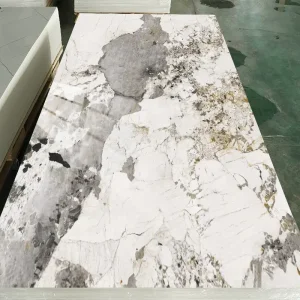
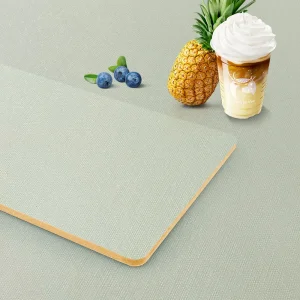
Premium Grade UV Marble Panels engineered for high-humidity coastal settings, commercial developments, and hospitality sectors.
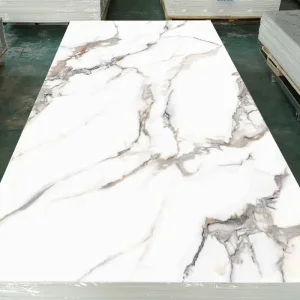
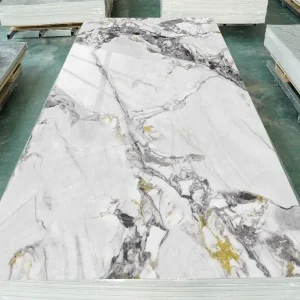
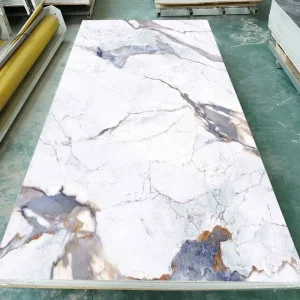
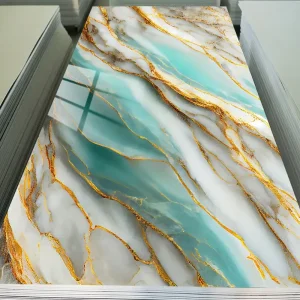
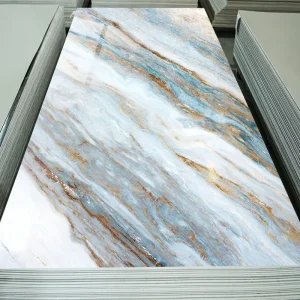
The interior decoration and building material landscape in metropolitan Lima is undergoing a structural transition. Developers, architects, and fit-out specialists are increasingly moving away from heavy, high-maintenance natural stones and ceramic slabs, preferring instead modern engineered composites. Chief among these is the UV Marble Sheet, also known scientifically as a Polycarbonate-Calcium Carbonate composite sheet cured with liquid photo-reactive resins under high-intensity ultraviolet lights.
As one of the world's most rapidly expanding metropolitan zones, Lima faces specific geographic, environmental, and logistical challenges. Our state-of-the-art manufacturing facility in Shandong, China—Shandong Xiangying New Materials Technology Co., Ltd.—acts as a premier supply partner for this booming construction market. We leverage over ten years of technical expertise to deliver decorative panels that satisfy not only aesthetic architectural requirements but also strict global performance criteria.
Unlike inland South American markets, Lima exhibits a highly distinct microclimate. The Pacific coastal breeze brings in perpetual relative humidity ranging from 80% to over 95% throughout the year, locally known as the "garúa". This relentless atmospheric moisture is coupled with high salinity from ocean mist, which accelerates the degradation of traditional interior surfaces.
Under these conditions, standard gypsum boards mold rapidly, medium-density fiberboard (MDF) swells and warps, and natural marble slabs require regular sealing to prevent micro-fissure erosion. Shandong Xiangying's UV Marble Sheets are structurally engineered to solve these issues. By combining PVC resin with inorganic calcium carbonate powder (limestone) under extreme pressure and heat, we form a completely water-impermeable base substrate. The subsequent UV-cured top layer protects the graphic pattern from salt-air oxidation and moisture ingress, guaranteeing a lifespan three times longer than traditional composite wall materials in Lima coastal zones like Chorrillos, Miraflores, and Magdalena del Mar.
Self-extinguishing technology with low thermal conductivity. Designed to meet international safety norms for high-rise commercial sectors in Lima.
Safe for interior deployment in hospitals, child-care centers, and premium residential spaces without toxic outgassing.
Advanced UV-curable coating prevents abrasion, micro-scratches, and atmospheric chemical degradation from ocean salt spray.
Architects in Peru evaluating cost-benefit matrices are turning away from traditional raw quarries. Let us examine the technical breakdown between Natural Marble, Large Ceramic Tiles, and Xiangying UV Marble Decorative Sheets:
| Performance Standard | Natural Marble Slabs | Large Ceramic Slabs | Xiangying UV Marble Sheets |
|---|---|---|---|
| Weight / Density | Heavy (~70-80 kg/m²), demands structural reinforcement. | Medium (~25-35 kg/m²), brittle, hard to transport. | Lightweight (~6.5-8.5 kg/m²), easily handled by 1 technician. |
| Installation Complexity | Wet mortar, high labor, anchor bolts, specialized masonry. | Special structural adhesive, easily cracked during cutting. | Structural glue / MS polymer adhesive, rapid dry-joint installation. |
| Moisture Absorption | Porous (~0.5%-2%), subject to moisture staining & salt damage. | Inert (~0.1%), zero rot, but grouting lines harbor mold. | Impermeable, mold-free, chemical resistant, zero-grouting option. |
| Cost / Sqm (Installed) | Extremely High ($150 - $450 USD/m²). | High ($80 - $180 USD/m²). | Cost-Effective ($15 - $35 USD/m² installed). |
| Seismic Performance | Rigid, high risk of detachment during seismic vibration. | Rigid, prone to structural cracking under tension. | Flexible polymer matrix adapts to building movements without cracking. |
The practical versatility of UV-cured PVC-calcium carbonate composites allows diverse applications across Lima’s commercial and residential zones:
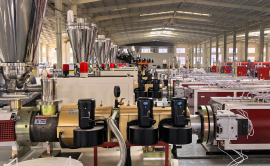
Shandong Xiangying New Materials Technology Co., Ltd. operates a highly standardized production model. Our facilities employ fully automated co-extrusion technology to form the rigid stone plastic composite (SPC) core. This is followed by a sequence of high-definition digital transfer printing and multiple UV topcoat applications. Each layer is cured dynamically using variable-output UV lamps to control the gloss rating, scratch resistance, and adhesion properties.
For the Lima, Peru market, we manage direct container logistics from our factory gates to Qingdao Port, then onward through Transpacific sea routes to the Port of Callao. All cargo undergoes strict seaworthy packaging, featuring moisture-barrier film wrapping, edge-protection guards, and reinforced steel-strapped wooden crates to guarantee zero-breakage transport over maritime distances.
As the construction industry moves towards environmental sustainability, Shandong Xiangying is leading the research and development of future-generation surface products:
Integrated Bamboo-Charcoal Core Venner: We are scaling up production of bamboo charcoal co-extruded wood veneer panels. These hybrid materials combine natural carbon fibers with polymer matrices, resulting in panels that not only exhibit zero formaldehyde but actively absorb volatile compounds and manage indoor humidity levels dynamically—a feature highly beneficial for Lima's indoor air quality.
Anti-Microbial & Matte UV Technology: In response to the post-pandemic healthcare market, we are developing silver-ion infused UV clearcoats. This treatment actively destroys 99.9% of bacteria and virus strains landing on the board surface, rendering them ideal for medical fit-outs in the Lima metropolitan district.
Explore our full catalog of UV-cured marble sheets, co-extruded outdoor decking, and eco-friendly bamboo wood veneers available for bulk import to Peru.
For architectural and engineering firms based in Peru, executing proper substrate preparation and utilizing matching chemical components is essential to assure a durable panel life. Due to Lima's relative humidity profiles, follow these recommended practices:
The plasterboard, masonry, or plywood substrate must be checked for dampness using standard moisture meters. Do not apply adhesives on raw, damp concrete walls. A water-repellent primer coat should be applied beforehand to prevent interstitial moisture from deteriorating the back of the panel. Ensure structural planar deviation is less than 2mm over a 2-meter gauge.
Use high-tack Polyurethane structural adhesives or MS polymer construction adhesives. These compounds maintain chemical elasticity throughout their lifecycle. Elasticity is crucial in seismic locations like Peru (where minor ground vibrations occur), as rigid adhesives can shear and release panels under structural stress.
Leave a 1mm thermal expansion gap between panels. Use custom T-profiles, internal corner profiles, and structural aluminum decorative trims. Apply high-grade neutral cure silicone along kitchen and bathroom joints to block water ingress completely.
 Xiangying